Address by EAM Dr. S. Jaishankar at the launch of India’s campaign for United Nations Security Council 2028-29.
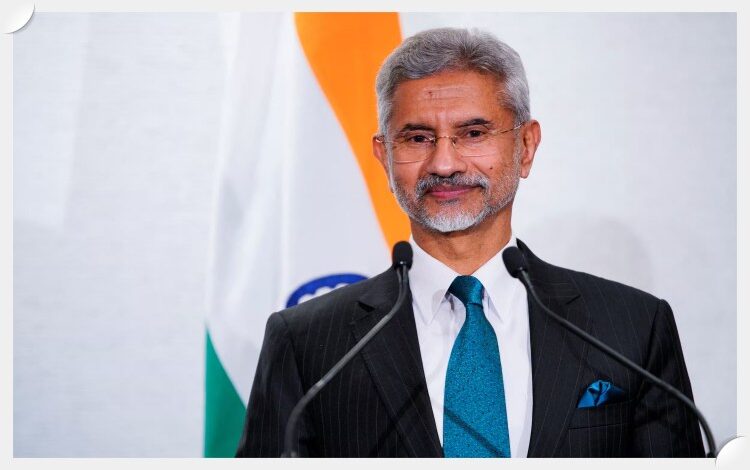
Ambassador Harish, Excellencies, dear colleagues,
It is a pleasure to join you today afternoon to launch
India’s candidature to serve as a non-permanent member of
the United Nations Security Council for the term 2028-29.
We do so at a time when the world is facing a profound
paradox. Never before has the world possessed such immense
capabilities to advance human welfare at this scale. At the
same time, we are witnessing levels of conflict, violence and
instability that threaten even those who may be far away. To
address this complexity, the United Nations must take the
lead and the Security Council must show the way. Elections
to its membership consequently assume great importance.
2. As a candidate, it is natural that member states would
like to understand what India brings to the table. One part of
that is our vision of the priorities that the world and the
United Nations must address. The other is a track record
which enables the international community to make its own
judgement.
3. Let me address the priorities first. As we contemplate
the global order, India’s focus will be on working for a secure,
peaceful and equitable world. A world where the voice of the
Global South is heard in equal measure. A world where
peacekeeping is ready for contemporary and future
challenges. A world where multilateralism reflects
contemporary realities and provides effective solutions, not
remain a bystander. A world where the promise of technology
is fully realized, while safeguarding against its misuse and
misapplication. A world as well, whose oceans are safe and
secure, so that maritime lifelines are not threatened. A world
where the scourge of terrorism is countered by choking the
resources that feed it. And a world where climate action and
climate justice, clean energy transitions and sustainable
growth are both valued and pursued.
4. Excellencies and Colleagues, each of these priorities is a
facet of a larger goal that reflects our indivisible and
2
integrated nature of existence. Recent developments have
only demonstrated that peace, progress and prosperity
cannot be sustained in a fragmented manner. We are too
tightly bound, whether it is through supply chains,
technology or communication. The world must, therefore,
focus on holistic advancement, both as individual nations
and as the international community. But that journey can
only be undertaken effectively when global order is valued
and rules are respected. This puts a premium on Norms, on
Trust and on Integrity. And that,, Ladies and Gentlemen, is
the approach that India offers. Securing Holistic
Advancement through Norms, Trust and Integrity; i.e.,
SHANTI, as an acronym, which is our word for Peace.
5. Allow me to dwell a little more on our priorities. Like
many nations that emerged independent again after
decolonization, India is convinced that peace is strengthened
by participation, not achieved by domination. The world is
inherently pluralistic and the United Nations itself is
constituted on the basis of sovereign equality. It is
imperative that globally consequential decisions and policies
3
are made through adequate deliberation. For that reason, we
have held the Voice of Global South summits to forge
common ground on important issues. During its G20
Presidency, India also ensured the entry of the African Union
as a formal member. Our development partnership spans
more than a 100 member states across Asia, Africa, and the
Pacific, Latin America and the Caribbean. When major
conflicts occurred, India has also enhanced global awareness
about their implications for food, fuel and fertilizer security.
We commit to present the concerns of the Global South on
international peace and security before the Security Council.
6. Colleagues, we are all aware that global governance has
to reform in order to transform. For that to happen,
multilateralism must be democratic, representative and
effective. There will be understandably different points of
view and divergent interests on the major issues of the day.
But that only enhances the value of harmonizing them and
enabling the Security Council to be more robust, responsive
and ready. Nations like India, which have a long history of
4
bridging differences and building consensus, can certainly
make their due contribution.
7. P e a c e k e e p i n g h a s b e e n a c r u c i a l e l e m e n t o f
maintenance of international peace and security since the
very inception of the United Nations. And India has always
been in the forefront of discharging that responsibility. Our
cumulative contribution is nearly 300,000 deployments in
about 50 missions worldwide. Currently, we have 4300
personnel across 10 of the 11 active missions. As we all
know, most of these missions are in Africa. Few countries
would have our experience in preparing peacekeeping to be
future-ready. There are different aspects including matching
of mandates to resources, safety of peacekeepers,
understanding of ground realities and wider consultations
that need to be adequately factored. Future-ready
peacekeeping means to be better equipped, to be
technologically enabled, to be realistically mandated and
focused on core objectives. India stands strongly with the
Women, Peace and Security agenda and will always champion
the role of women peacekeepers.
5
8. Colleagues, as the world evolves, striking a balance
between the benefits and risks of technology gains salience.
And the reason is that technology itself is impacting our
daily existence in a more profound manner. Artificial
Intelligence (AI) represents its cutting edge today. India has
put forward a human-centric vision of AI, that draws on both
its capabilities and on India’s traditions. Our word for that is
MANAV, which is an acronym for Moral and ethical systems,
Accountable governance, National sovereignty, Accessible
and inclusive, and Valid and legitimate systems. As a nation
that has contributed to bridging the global digital divide, we
stand equally committed in respect of AI. That is why the
recent AI Impact Summit in India was based on a vision of
‘AI for all’. Equally important, we are also determined to
counter the misuse of AI and threats it may pose to
international peace and security in different ways.
9. Friends, in an era where supply chains connect our
economies, the world is also increasingly focused on securing
the maritime commons. Recent events have only underlined
6
the need to do so. The challenge begins with ensuring
adherence to relevant international law, specifically the
UNCLOS. Our collective interest is in maintaining safe and
unimpeded flow of maritime commerce. Where required,
those nations with requisite capabilities must cooperate to
combat piracy as well. The safety of seafarers is another
major concern thrown up by developments in the Gulf.
P r o m o t i n g s e a r c h a n d r e s c u e m i s s i o n s , p r o v i d i n g
humanitarian assistance and disaster relief (HADR) and
encouraging capacity building while sharing best practices –
these have long been facets where India has long been
active . Our International Fusion Centre anchors a
cooperative network that covers the entire Indian Ocean
region. We will endeavour to ensure that these issues get the
attention they deserve from the Security Council.
10. Colleagues, even as the world strives to sustain growth
and promote prosperity, some longstanding challenges
continue to confront us. Significant among them is
terrorism. For far too long, our efforts have concentrated on
countering its symptoms. But that would only give us limited
7
results unless we are focused on constricting its resource
base. Our commitment is to concentrate on countering
terror financing and encourage objective and evidence-based
proposals for listing of terrorist groups.
11. Excellencies, ladies and gentlemen, when India
advocates ‘Vasudaiva Kutumbakam’ (World is a family) as an
approach, we don’t simply preach; we practice it as well. So
let me share with you today a few recent examples of our
contribution to global well-being:
(i) In maritime security, India makes wide-ranging and
regular contributions, including in anti-piracy, counter-
narcotics and anti-trafficking operations. Apart from the
Fusion Centre that I spoke about in India, our forces are
protecting sea lanes across the Indo-Pacific, specifically
in northern and southern Arabian Sea, Gulf of Aden,
Malacca Straits and even the Gulf of Guinea.
(ii) A long record of peacekeeping is today extended to
offering training and capacity building to 98 nations in
8
the Delhi Centre of UN Peacekeeping. The standards we
set are reflected in the awards by the United Nations to
two of our women officers recently.
(iii) In disaster response, through Operation Amistad just
this month, an Indian field hospital and medical
contingent rendered immediate treatment and relief
after the earthquake in Venezuela.
(iv) Let me give you a fourth example. UNRWA recognizes
India as its top emerging donor. We have only yesterday
at the Palestine donor group meeting in Brussels,
additionally committed to setting up a specialty
hospital, an artificial limb fitment centre and a
vocational training institute for Palestine. This is in line
with our longstanding support for a two-State solution.
(v) As a First Responder, whether it was Cyclone Ditwah in
Sri Lanka or Hurricane Melissa in Jamaica, India
stepped forward decisively. Our prompt mobilization,
9
disaster response teams and emergency supplies have
made a difference to the lives of many.
(vi) In advancing health security, India is building further
on vaccine supplies to the Global South. We have gifted
medicines and life-saving equipment to a range of
destinations, among them Afghanistan, Tanzania,
Madagascar, Maldives, Fiji, Vanuatu and Peru. The
medical assistance for Africa CDC for containment of
Ebola is yet another example.
(vii) In pursuance of food security, India has responded to
crisis situations in a number of countries – Sierra Leone,
Madagascar, Burkina Faso, Mozambique and Malawi,
being some of the examples. .
(viii) To strengthen energy and fertilizer security in these
turbulent times, we have been a reliable supplier of
these products to our neighbours.
10
(ix) And where the larger canvas of development is
concerned, there are today Indian-funded projects in as
many as 79 countries across multiple geographies.
(x) So these represent a strong statement of solidarity, and
let me say this, in a world with too many conflicts and
tensions, India has consistently espoused dialogue and
diplomacy. We have sought to bridge differences, we
have sought to find common ground. Our focus has been
on mitigating the impact of these developments for the
Global South.
12. So colleagues, friends, from this, you can judge for
yourself the level of India’s commitment to a more secure,
stable and prosperous world. Those goals are best achieved
through wider consultations and harmonizing different
interests. We believe that India’s presence in the Security
Council will help strengthen decision making in this vital
body. We therefore seek your support for our candidature. I
thank you for your attention.